
Overview
Technical record / 0055
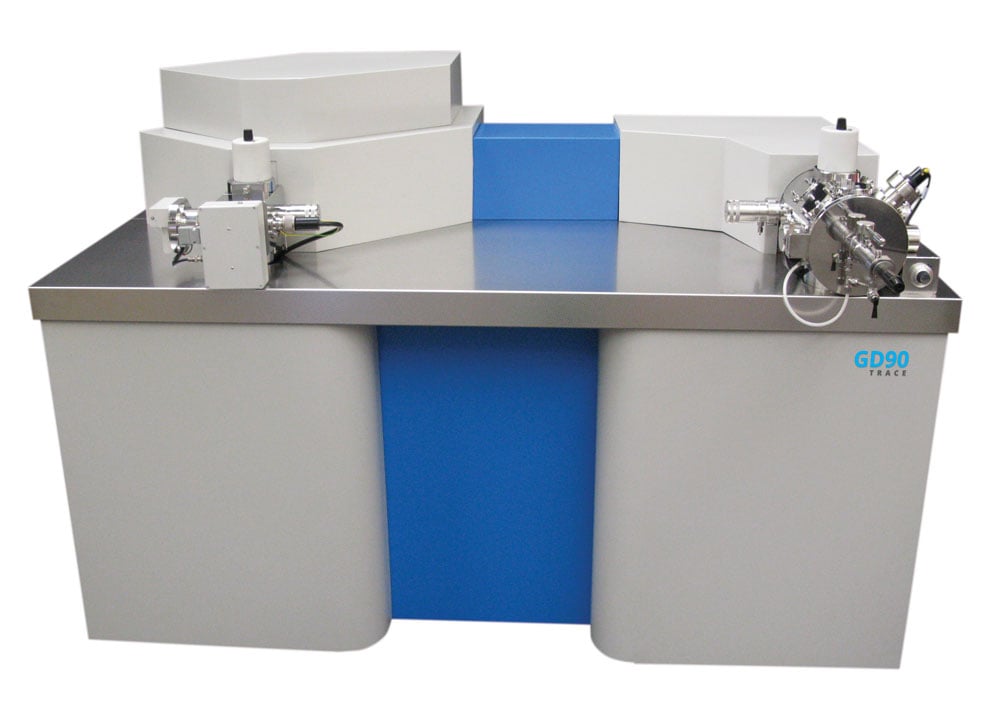
The GD90 Trace, the GDMS instrument from MSI, features a proven optical platform with innovative modern stable electronics and control. All voltages are under computer control providing unsurpassed ease of use with a simple USB interface to the control, acquisition and processing PC. Remote control of the instrument and hardware control of acquisition are also incorporated.
What Sets This Product Apart
Full elemental analysis of major (wt%) to ultra-trace elements (ppb to sub-ppb) within a single scan
Direct solid sampling technique, thus alleviating the need for chemical digestion
Continuously variable high resolution capabilities from <400 to >10,000 RP (10% valley definition)
Dual collectors allowing up to 12 orders of linear dynamic range
A proven technique for high sensitivity depth-dependent distribution analysis of trace elements in coatings and other multi-layered advanced materials
Minimal matrix effects allow calibration without matrix matched standards by using Relative Sensitivity Factors (RSF)
Glow discharge mass spectrometry (GDMS) is a mature, versatile technique for the direct determination of elemental content (matrix to sub-trace) in a variety of materials. The GD90 Trace from MSI is capable of many different types of analyses, and can accommodate just about any sample purity, matrix and geometry.

GDMS analyses
Sample Types
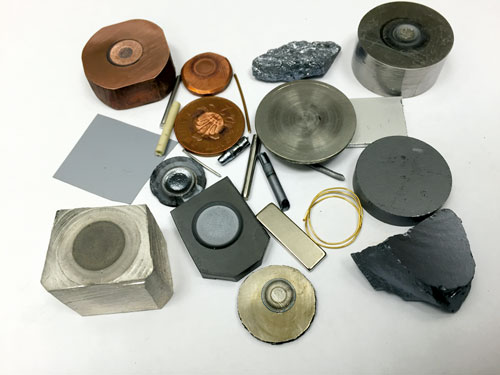
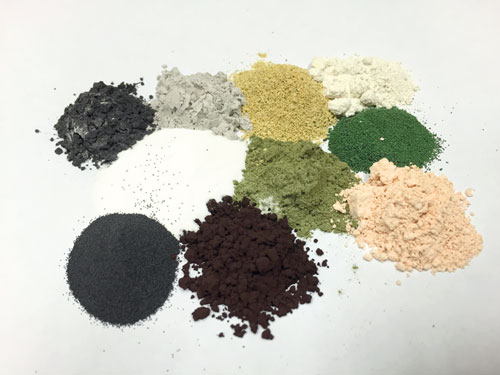
All types of materials can be analysed, from alloys to >9N. The samples that we analyse on the GD90 are typically pins 2mm x 2mm x 20mm (or ∼3mm ø x 20mm) or flat blocks ∼15mm x ∼15mm x >1mm, but many other types of sample geometries can be accommodated by mounting them on a secondary binder. Some examples of irregular type samples which can be analysed are:
granular powders | wafers | screws | filings |
|---|---|---|---|
fine powders | shot pellets | wires | turnings |
thin foils (<1µm) | waste products | chips | shards |
 | 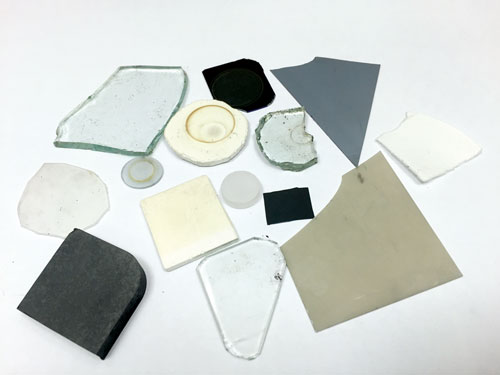 |  |
Oxides and other non-conductive materials can be analysed in direct current mode (DC) by mounting them on a secondary conductive binder, typically indium. Generally, this is a simple, quick procedure which can be done manually. Additionally due to cryo-cooling of the GD cell, low melting point materials such as tin (Sn), antimony (Sb), indium (In) and gallium (Ga) can be analysed.
Interested in This Product?
Contact our team for detailed specifications, pricing, and customization options.
Request Information